Our Motto
"Zero Tolerance to Ragging – A Firm No to Ragging in Any Form."
Objective
The Anti-Ragging Cell of DVAACAS is committed to maintaining a safe, inclusive, and ragging-free campus and hostel environment. Strict anti-ragging regulations are enforced, and disciplinary as well as legal action is taken against offenders.
Ragging Is a Serious Offence
Ragging is a grave and cognizable offence under Indian law. As per Supreme Court and UGC regulations, offenders may face both institutional disciplinary action and criminal prosecution.
Ragging can have severe psychological consequences, including anxiety, depression, low self-esteem, emotional distress, and poor academic performance. Any attempt to justify ragging as a "harmless interaction" or "induction activity" is unacceptable.
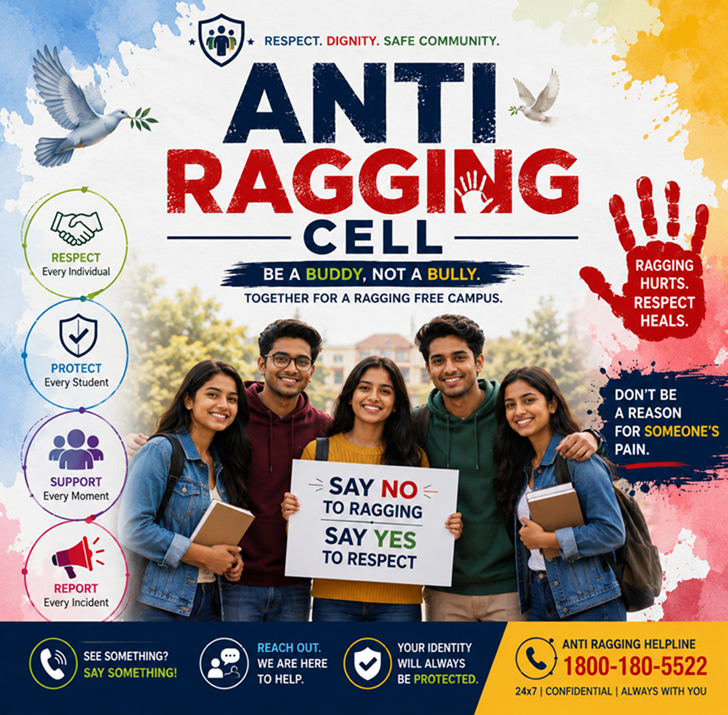
What Constitutes Ragging?
As defined by the Honourable Supreme Court of India and UGC Regulations (2009), ragging includes any act that causes physical or psychological harm, fear, humiliation, embarrassment, or harassment to a student.
This includes:
- Teasing, bullying, or rude behaviour
- Physical, verbal, or emotional harassment
- Forcing students to perform unwanted or humiliating acts
- Disrupting academic activities
- Forcing students to complete another person's work
- Financial extortion or coercion
- Physical or sexual abuse
- Online harassment, insults, or intimidation
- Discrimination based on caste, religion, race, gender, language, nationality, appearance, economic status, or any other personal identity
Campus Monitoring & Prevention
Ragging is strictly prohibited across the campus, including classrooms, departments, hostels, canteens, playgrounds, cafeterias, and college transport.
To ensure a safe environment, the College has established:
- CCTV surveillance across key campus and hostel areas
- Anti-Ragging Squads conducting regular monitoring
- Faculty Advisors assigned to mentor, guide, and support students
DVAACAS is committed to fostering a respectful, secure, and student-friendly environment where every learner can thrive with dignity and confidence.
Penalties and Punishments
Defaulters face severe consequences from both the institution and legal authorities:
| Action taken by the Institute | Action taken by Law & Order Agencies |
|---|---|
|
|
Student & Parent Responsibilities
Before Admission
Admission will be confirmed only after the submission of two Anti-Ragging Affidavits:
- Student Affidavit (Annexure I)
- Parent Affidavit (Annexure II)
Upon Registration
Every student will receive the Anti-Ragging Handbook containing the contact details of the Anti-Ragging Committee, Anti-Ragging Squad, and Faculty Advisors.
Hostel Regulations
- Freshers are accommodated in a separate, secure hostel block under 24/7 supervision.
- Entry of seniors is strictly prohibited without the Warden's approval.
- All hostel residents must report to their rooms by 9:00 PM for mandatory attendance.
Freshers' Orientation & Induction
To ensure a smooth transition into college life, all first-year students participate in a two-week Orientation and Induction Programme.
The programme includes sports, yoga, cultural activities, and interactive sessions that encourage positive relationships among students, seniors, and faculty members. It culminates in active student participation during the National Independence Day celebrations.
How to Report an Incident (Support & Helpline)
If you experience or witness ragging, or even apprehend an impending incident, report it immediately. Complaints can be submitted in person, via phone, email, or anonymously using the physical drop boxes located in academic buildings and hostels.
- National Anti-Ragging Helpline: 1800-180-5522 (24×7 Toll-Free)
- College Anti-Ragging Email: antiraggingdvaacas@gmail.com
- Online Filing Portal: www.antiragging.in
Key Anti-Ragging Cell Contacts
- Anti-Ragging Committee Chairperson: Principal
- Anti-Ragging Committee Member: Director of Physical Education
- Police Representative: Inspector, Nandambakkam Police Station